
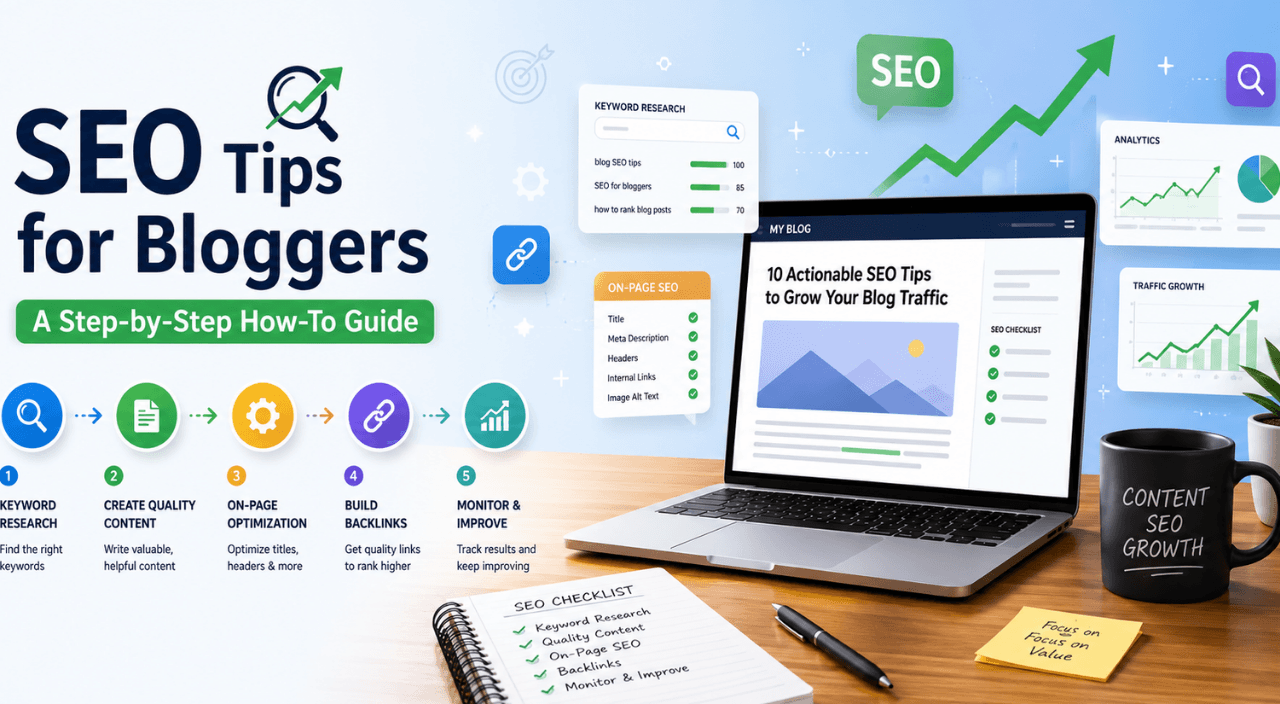
Did you know that over 90% of published web content receives zero traffic from search engines? This staggering reality highlights why relying on guesswork is a recipe for failure. If you want to turn your creative passion into a sustainable online business, you need a proven roadmap.
We provide a data-driven approach to help you navigate search engine complexities. By moving away from outdated tricks, you can build a foundation that connects your work with the right audience consistently. These actionable strategies are designed to help you grow without the hype.
Whether you are just starting or looking to refine your process, these SEO tips for bloggers offer the clarity you need. Let’s transform your site into a reliable engine for long-term success.
Key Takeaways
- Focus on data-driven strategies rather than outdated search engine hacks.
- Build a sustainable business model by targeting the right audience.
- Prioritize long-term growth over quick, unreliable traffic spikes.
- Implement clear, actionable steps to improve your search visibility.
- Understand the mechanics of search engines to gain a competitive edge.
Understanding the Fundamentals of Search Engine Optimization
To build a successful blog, you must first grasp the mechanics behind how search engines discover and rank your work. Many creators view search engines as mysterious black boxes, but they are actually highly structured systems designed to organize the world’s information. By learning these core processes, you can implement effective SEO tips for bloggers that move the needle on your traffic.
How Search Engines Crawl and Index Your Content
Search engines utilize automated programs, commonly known as crawlers or spiders, to explore the internet. These bots constantly traverse the web, following links from one page to another to discover new content. Once a page is found, the search engine analyzes its structure and content to determine its subject matter.
After the analysis, the information is stored in a massive database called an index. Think of this index as a digital library that allows search engines to retrieve relevant pages in milliseconds. Following these SEO best practices for bloggers ensures that your site is easily readable by these bots, which is the first step toward achieving higher rankings.
The Role of User Intent in Modern SEO
While technical crawling is essential, search engines prioritize content that satisfies the user. This concept is known as user intent, and it represents the primary reason someone types a query into a search bar. You must align your writing with what the reader is actually looking for, whether they want to learn, buy, or find a specific website.
When you provide the best possible answer to a query, you signal to search engines that your page is a valuable resource. Incorporating these SEO tips for bloggers into your strategy means focusing on quality and relevance rather than just technical tricks. By solving the user’s problem, you naturally improve your chances of ranking higher in search results.
Conducting Effective Keyword Research for Your Niche
Effective keyword research is the bedrock of any successful content strategy, turning guesswork into a data-backed roadmap. By understanding what your audience types into search bars, you can create content that solves their specific problems. These SEO tips for bloggers are essential for anyone looking to build a sustainable online presence.
Identifying High-Volume and Low-Competition Keywords
The secret to growth lies in finding the “sweet spot” where search volume is high but competition remains manageable. You do not want to target terms that are too broad, as these are often dominated by massive, established websites. Instead, focus on long-tail keywords that reflect specific user intent.
“The best place to hide a dead body is page two of Google search results.”
When you target these specific phrases, you increase your chances of ranking quickly. This approach is vital for improving SEO for blogs that are just starting out and need to build initial authority.
Utilizing Tools Like Ahrefs and Google Keyword Planner
Data-driven decisions require the right software to track search trends and difficulty scores. Google Keyword Planner is a fantastic free starting point for beginners to see what people are searching for in your niche. For more advanced insights, tools like Ahrefs provide deep data on backlink profiles and content gaps.
Using these tools allows you to filter by monthly search volume and keyword difficulty. You should prioritize terms that show a clear path to the first page of results. Consistent use of these platforms is one of the most effective SEO tips for bloggers who want to scale their traffic.
Analyzing Competitor Keyword Strategies
Your competitors are often your best teachers when it comes to content planning. You can use the site: search operator in Google to see exactly which pages a competitor has indexed. This helps you identify topics they cover well and, more importantly, areas they have missed.
By uncovering these content gaps, you can produce better, more comprehensive articles that capture the traffic they are leaving on the table. This competitive analysis is a cornerstone of improving SEO for blogs and ensures your content remains relevant in a crowded market.
Essential SEO Tips for Bloggers to Master On-Page Optimization
On-page optimization acts as the bridge between your high-quality content and the search engines that index it. By refining the elements directly on your site, you help algorithms understand the context of your work. Implementing these blogger SEO optimization strategies ensures that your hard work reaches the right audience effectively.
At Earn Simplify, we believe that mastering these technical details is a core part of building a sustainable online business. When you focus on these fundamentals, you create a better experience for both your readers and search crawlers.
Writing Compelling Title Tags and Meta Descriptions
Title tags and meta descriptions are the most visually significant elements that influence whether a user clicks on your search result. Think of these as your digital storefront window. A compelling title should include your primary keyword while promising value to the reader.
Your meta description serves as a brief pitch to convince users to visit your site. Keep these descriptions concise and actionable to maximize your click-through rates. Following these blogging SEO tips will help you stand out in competitive search engine results pages.
Optimizing Header Tags for Readability and SEO
Header tags provide a logical structure that helps search engines parse your content. Use your H1 tag for the main title, followed by H2 and H3 tags to break up sections. This hierarchy is essential for SEO best practices for bloggers who want to keep readers engaged.
Properly formatted headers make your content scannable and easy to digest. When you organize your thoughts clearly, you improve the overall user experience. Consistency in your header structure is a simple yet powerful way to signal relevance to search engines.
The Importance of Image Alt Text and File Naming
Many creators overlook the power of images in their search strategy. Descriptive file names and alt text allow search engines to “see” your visual content. Always use relevant keywords in your alt tags to describe the image accurately.
This practice not only boosts your search performance but also improves accessibility for users with visual impairments. By adopting these SEO best practices for bloggers, you ensure that every part of your page contributes to your growth. Small, intentional updates to your media files can lead to significant improvements in your site’s visibility.
Crafting High-Quality Content That Ranks
Creating content that resonates with readers while satisfying search algorithms is the ultimate goal for any serious blogger. High-quality writing acts as the primary signal to search engines that your site provides genuine value. By focusing on blogging SEO tips that prioritize the user experience, you build a foundation for long-term success.

Developing Comprehensive Content Clusters
To establish yourself as an authority in your niche, you should organize your site around content clusters. This strategy involves creating a central “pillar” page that covers a broad topic, supported by several smaller articles that dive into specific sub-topics. This structure helps search engines understand the depth of your expertise.
When you link these related posts together, you create a logical flow for your readers. This internal linking structure is essential for improving SEO for blogs because it keeps visitors on your site longer. It signals to Google that your website is a comprehensive resource for your specific subject matter.
Balancing Keyword Density with Natural Writing
Many beginners make the mistake of forcing keywords into every sentence. Instead, you should focus on writing naturally for your audience first. Modern search engines are sophisticated enough to understand context, synonyms, and the overall intent of your writing without needing repetitive phrases.
When applying blog post SEO tips, aim for a conversational tone that feels authentic. If a keyword does not fit naturally into your sentence, it is better to leave it out. Your primary goal is to provide clear, helpful answers to the questions your readers are asking.
“Quality content means more than just word count; it means providing the most helpful answer to the user’s query in the most efficient way possible.”
Updating Old Blog Posts for Freshness
Your work is not finished once you hit the publish button. Search engines favor websites that keep their information current and accurate. Regularly reviewing and updating your older content is a powerful way to maintain your rankings over time.
You can improve your performance by adding new data, fixing broken links, or expanding on points that were previously brief. This practice ensures that your blog remains a reliable resource for your audience. Use the table below to compare different content maintenance strategies.
| Strategy | Frequency | Primary Benefit |
|---|---|---|
| Content Audits | Quarterly | Identifies outdated info |
| Keyword Refresh | Bi-annually | Targets new search trends |
| Internal Link Update | Monthly | Boosts site navigation |
Technical SEO Best Practices for Bloggers
Building a successful blog requires more than just great writing; it demands a solid technical foundation. While content is king, your site architecture acts as the castle that protects and displays your work. By focusing on these SEO best practices for bloggers, you ensure that search engines can easily find and rank your pages.
Improving Site Speed and Core Web Vitals
Site speed is a critical factor in how users experience your content. If your pages take too long to load, visitors will likely leave before reading a single word. Google uses Core Web Vitals to measure how fast and stable your site feels to the average user.
You can improve these metrics by compressing your images and using a reliable hosting provider. Speed is not just a technical metric; it is a direct contributor to your bottom line.
“A fast website is a user-friendly website, and search engines prioritize sites that provide the best experience for their visitors.”
Implementing Proper URL Structures and Permalinks
Your URL structure should be clean, descriptive, and easy to read. Avoid using long strings of numbers or random characters in your links. Instead, use your primary keyword to tell both users and search engines exactly what the page is about.
- Keep URLs short and concise.
- Use hyphens to separate words for better readability.
- Remove unnecessary stop words like “a,” “the,” or “and.”
A logical structure helps search engines understand the hierarchy of your blog. This is one of the most effective blogging SEO tips for maintaining a clean site architecture over time.
Managing XML Sitemaps and Robots.txt Files
XML sitemaps act as a roadmap for search engine crawlers. These files list all the important URLs on your blog, ensuring that nothing gets missed during the indexing process. You should submit your sitemap to Google Search Console to speed up discovery.
The robots.txt file, on the other hand, tells search engines which parts of your site they should avoid. By managing these files correctly, you maintain full control over your site’s crawl budget. Implementing these blogging SEO tips will help you stay ahead of the competition while keeping your site healthy and accessible.
Mastering these technical elements does not require a degree in computer science. By following these SEO best practices for bloggers, you create a robust environment where your content can truly thrive.
Building Authority Through Strategic Link Building
Earning trust from other websites is a vital step in mastering search engine optimization for bloggers. When reputable sites link to your content, they provide a vote of confidence that signals your expertise to search engines. This process is essential for long-term growth and establishing your domain as a reliable source of information.
Creating Linkable Assets for Natural Backlinks
The most sustainable way to earn links is by creating content that others naturally want to cite. You should focus on developing linkable assets, such as original research, data-driven reports, or comprehensive industry guides. These resources provide unique value that is difficult for others to replicate.
When you publish high-quality data, you become the primary source for other writers in your niche. This strategy encourages organic backlinks, which are the gold standard for improving your site’s authority. Consistency in quality is the key to attracting these valuable citations over time.
Executing Ethical Guest Posting Outreach
Guest posting remains a powerful tool when executed with a focus on genuine value rather than just link acquisition. You should identify high-authority blogs in your niche and pitch topics that solve specific problems for their audience. This approach builds relationships with other creators while showcasing your expertise.
- Research target websites to ensure they align with your brand values.
- Craft personalized pitches that highlight the unique insights you offer.
- Focus on providing helpful, educational content that benefits the host site’s readers.
Internal Linking Strategies to Distribute Page Authority
You do not always need external sources to improve your site’s standing. Internal linking is a critical component of blogger SEO optimization that helps you distribute authority across your own pages. By linking from high-traffic posts to your newer or less visible content, you guide both users and search engine crawlers through your site.
Use descriptive anchor text to help search engines understand the context of the linked page. This simple practice ensures that your most important content receives the attention it deserves. A well-structured internal link network creates a cohesive experience that keeps readers engaged on your site for longer periods.
Optimizing Your Blog for Mobile and User Experience
Creating a seamless mobile experience is no longer optional for serious content creators. Search engines now prioritize websites that offer a smooth, intuitive journey for every visitor. By focusing on these elements, you are effectively improving SEO for blogs while keeping your audience engaged.
Ensuring Responsive Design Across All Devices
A responsive design ensures that your content looks perfect on everything from a large desktop monitor to a small smartphone screen. When your layout automatically adjusts to the user’s device, you remove friction and frustration. This technical foundation is a cornerstone of effective search engine optimization for bloggers.
Test your site regularly on various screen sizes to catch layout issues early. If elements overlap or text becomes too small, visitors will likely abandon your page. A clean, flexible layout keeps your site accessible to everyone, regardless of how they choose to browse.
Reducing Bounce Rates Through Better Navigation
High bounce rates often signal that users cannot find what they need quickly. You should simplify your menu structure to ensure that your most important content is only one or two clicks away. Intuitive navigation acts as a roadmap, guiding your readers deeper into your site.
Consider using a sticky header or a clear search bar to help users explore your archives. When visitors can easily move between related posts, they spend more time on your site. This increased dwell time sends positive signals to search engines, further improving SEO for blogs.
Improving Readability with Proper Typography and Spacing
Readability is the secret weapon of successful content creators. Large blocks of text can overwhelm mobile users, so use short paragraphs and plenty of white space to break up your ideas. Choose a font size that is easy to read without requiring the user to zoom in.
Proper line height and margins also play a vital role in keeping eyes on the page. When your content is visually comfortable, readers are more likely to finish your articles. Prioritizing the user experience in this way creates a professional environment that encourages return visits.
Leveraging Social Media to Boost Search Visibility
While social media platforms do not directly influence search rankings, they serve as powerful catalysts for your content’s reach. When you master search engine optimization for bloggers, you create a foundation that social media can then amplify. By sharing your work across various channels, you invite a wider audience to discover your expertise.

Promoting Content to Increase Social Signals
Word of mouth and community engagement remain the most effective, lasting ways to promote your content. When readers share your posts, they create social signals that indicate your content is valuable and relevant. This organic buzz helps build trust with your audience and signals to search engines that your site is a hub of active, high-quality information.
Encouraging Shares and Engagement to Drive Traffic
To drive consistent traffic, you must focus on genuine interaction rather than just broadcasting links. Avoid the temptation to spam your followers with every single update; instead, share content that sparks conversation or solves a specific problem. Engagement is the key to building a loyal community that returns to your blog time and time again.
Ask questions in your posts and respond to comments to foster a sense of belonging. When your readers feel heard, they are much more likely to share your content with their own networks. This cycle of sharing creates a sustainable traffic loop that supports your long-term growth.
Integrating Social Media Feeds into Your Blog
Bringing your social presence directly onto your website creates a seamless experience for your visitors. By choosing to integrate social media SEO strategies, you keep your site feeling fresh and dynamic. This approach is a critical component of effective blogger SEO optimization because it encourages users to stay longer and explore your social channels.
Displaying a live feed of your latest posts or user-generated content can significantly boost your site’s credibility. It shows that your brand is active and engaged in the broader online conversation. Always ensure these feeds are optimized for speed so they do not negatively impact your page load times.
Monitoring Performance with Google Analytics and Search Console
Data is the compass that guides your blogging and SEO techniques toward long-term success. Without a clear view of your metrics, you are essentially flying blind in a competitive digital landscape. By leveraging professional tools, you can refine your blog SEO strategies to ensure your content reaches the right audience.
Tracking Organic Traffic Trends
Google Analytics 4 serves as the primary hub for understanding how visitors find your site. You should focus on the “Organic Search” channel to see which articles bring in the most readers. Consistent growth in this area indicates that your content is resonating with search engine algorithms.
Look for patterns over time rather than daily fluctuations. If you notice a sudden dip, check if it coincides with a major algorithm update or a seasonal shift in search interest. Staying informed allows you to pivot your content plan before small issues become major problems.
Identifying Pages with High Exit Rates
High exit rates on specific pages often signal that your content is not meeting user expectations. When a reader leaves your site immediately, they might have found the information irrelevant or difficult to read. Analyzing these pages helps you identify where your user experience needs improvement.
Consider updating these posts with better internal links or more engaging visuals to keep readers on your site longer. Sometimes, a simple change to your call-to-action can significantly reduce bounce rates. Always prioritize content quality over keyword volume to keep your audience satisfied.
Using Search Console to Fix Indexing Errors
Google Search Console is an essential tool for maintaining the technical health of your blog. It alerts you to crawl errors, mobile usability issues, and security concerns that could hurt your rankings. Fixing these errors promptly ensures that your best content remains visible in search results.
Remember that Google does not use the keywords meta tag for ranking purposes, so focus your energy on resolving these technical hurdles instead. By keeping your site error-free, you build a stronger foundation for your blogging and SEO techniques. Use the following table to understand which metrics matter most for your growth.
| Metric | What It Measures | Why It Matters |
|---|---|---|
| Organic Sessions | Total search traffic | Indicates overall visibility |
| Exit Rate | Last page viewed | Shows content engagement |
| Indexing Status | Pages in Google | Ensures searchability |
| Average Position | Keyword ranking | Tracks competitive growth |
Avoiding Common SEO Mistakes That Hurt Rankings
While you focus on growth, it is equally vital to recognize the mistakes that could trigger search engine penalties. Implementing effective blog SEO strategies is only half the battle; the other half involves protecting your site from avoidable errors. If you are not careful, you might accidentally fall into a common SEO mistake that stalls your progress.
Steering Clear of Keyword Stuffing
Keyword stuffing occurs when you force terms into your content unnaturally to manipulate rankings. This practice is strictly against Google’s spam policies and creates a frustrating experience for your readers. Instead of helping you rank, it often leads to lower visibility and potential manual actions against your site.
Focus on writing for humans first. When you prioritize clarity and value, your content naturally incorporates the terms you want to rank for without sounding robotic.
Preventing Duplicate Content Issues
Duplicate content happens when identical or very similar text appears on multiple URLs. This confuses search engines, making it difficult for them to decide which version to show in search results. You should always ensure that your blog post SEO tips are unique to each page.
- Use canonical tags to point to the original version of a page.
- Avoid syndicating content without proper attribution or meta tags.
- Check your site structure to ensure category pages do not mirror individual post content.
Avoiding Black-Hat Link Building Tactics
Some creators are tempted by shortcuts like buying links or participating in link farms to boost authority quickly. These black-hat tactics are highly risky and can lead to severe penalties that are difficult to reverse. Sustainable growth relies on earning links through high-quality content that others naturally want to reference.
Always vet your outreach partners and focus on building genuine relationships within your niche. By staying away from manipulative schemes, you ensure that your site remains a trusted resource for both users and search engines over the long term.
Advanced Blogging and SEO Techniques for Long-Term Growth
Scaling your blog requires more than just great writing; it demands a sophisticated technical approach. Once you have mastered the fundamentals, you can gain a significant competitive edge by applying blogging and SEO techniques that go beyond standard practices. These methods help you secure your site’s future and ensure consistent traffic growth over time.
Implementing Schema Markup for Rich Snippets
Schema markup is a powerful tool that acts as a translator between your website and search engines. By adding this structured data to your code, you help Google understand your content better, which can lead to rich results like star ratings, event details, or how-to steps. These visual enhancements often lead to higher click-through rates.
You do not need to be a developer to get started with these blog SEO strategies. Many plugins can automate the process, allowing you to highlight key information without manual coding. For those looking to dive deeper into technical optimization, you can explore advanced SEO resources to refine your implementation.
Optimizing for Voice Search and Featured Snippets
The way people search is changing rapidly as voice assistants become more common. To capture this traffic, you should focus on conversational keywords and direct answers to common questions. By structuring your content to address specific user queries, you increase your chances of appearing in a featured snippet at the top of the search results.
Think of your content as a direct answer to a user’s question. Use clear headings and concise paragraphs to make it easy for search algorithms to extract your information. This proactive approach ensures your blog remains relevant as search behavior continues to evolve.
Scaling Your Content Strategy with Outsourcing
As your blog grows, you will eventually reach a point where you cannot do everything alone. Scaling your content strategy often involves outsourcing tasks to skilled writers or editors who follow your established brand guidelines. This allows you to maintain high quality while increasing your output volume.
Before you hire help, ensure you have clear terms of use and style guides in place. Consistency is the key to long-term success when managing a team. The following table outlines how these advanced tactics compare in terms of effort and impact.
| Strategy | Primary Benefit | Effort Level | Impact |
|---|---|---|---|
| Schema Markup | Rich Snippets | Medium | High |
| Voice Search | Featured Snippets | High | Very High |
| Outsourcing | Content Volume | High | High |
Conclusion
Mastering the digital landscape is a journey that requires patience, consistency, and a commitment to providing value to your readers. You now possess the foundational knowledge to turn your creative passion into a sustainable online business.
Success in this field relies on your ability to integrate blogging and SEO techniques into your daily workflow. By focusing on the fundamentals like keyword research and technical health, you build a traffic source that grows over time.
Search engine optimization is not a one-time task. It remains an ongoing process of refinement and adaptation as algorithms change. You should view these blog post SEO tips as a living framework for your future content strategy.
Start implementing these strategies today to see the long-term benefits for your website. Your dedication to quality will set you apart in a crowded digital space. We look forward to seeing your site climb the rankings and reach new audiences.